

Most of the time, when we get our ropes, it would be quite fuzzy and probably rough. Unless you are the group that goes by ‘au naturale’ and use the ropes as is till it becomes super seasoned, OR love a ‘snowy’ feel whenever you pull the rope, OR want to experience ‘seme’ rope but dun dare to commit to coconute ropes; chances is that you prefer to have a relatively nice feeling rope on your body. One of the plus side of having a treated rope (even at the most basic of just singeing) is that you will not have all the terrible lint flying all around your room. (I collect all the lint as fire starter for my BBQs)
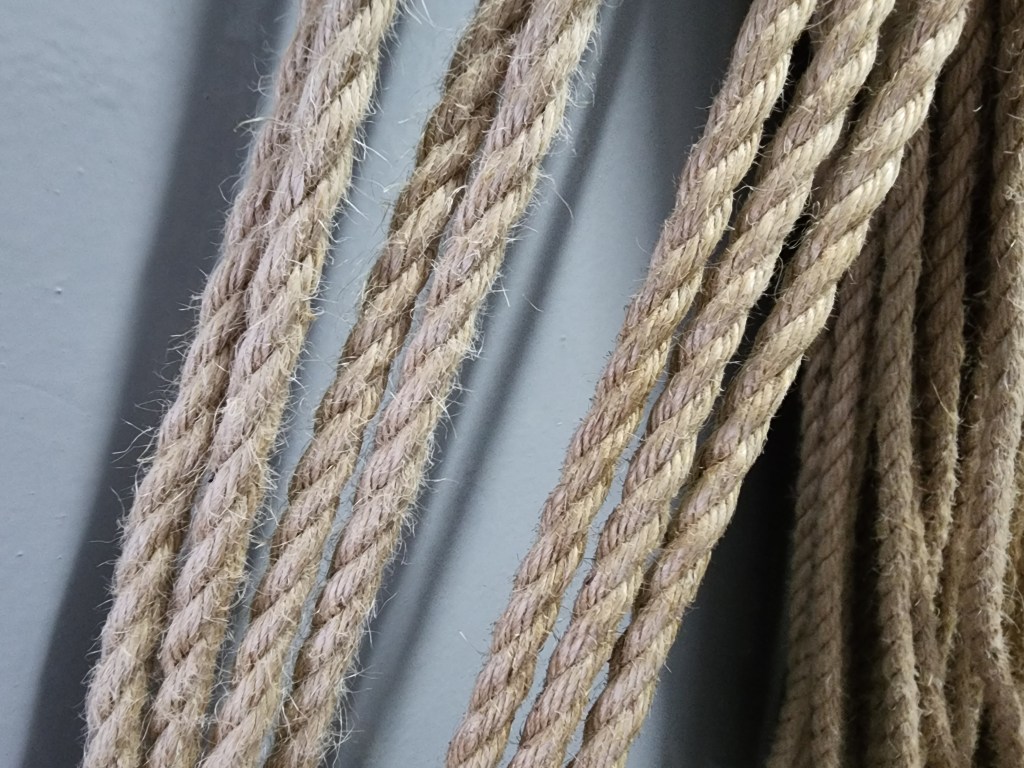
As you can see, just a simple running your ropes over the fire will remove a majority of the fuzz on your rope. Plus I wiped it down with a damp cloth to clean away the soot.
So, there are plenty of ways to condition your ropes. They work in combination, of course, for the best results. But there are 2 things I realised over the course of conditioning so many ropes are:
1. Different Sources
The most obvious one would be different shops / sources use different grades of jute. Even if they are the same grade, it may come from different sources (even though 95% of the world jute comes from either India or Bangladesh). Your Ogawa jute, your MyNawashi, your Amatsunawa, etc comes from the same 2 countries. Well, maybe some from Nepal or Myanmmar.
So end of the day, it is just made / twisted in which country. Which then brings me to the point – what is the climate / season the jute are taken out and made into ropes. Hence you will have the (minor) difference in batches. Why I say this is because, I bought from the same supplier in 2 different seasons and I typically find /feel that I the quality seems to be a little off. BUT, over time of usage, it comes back to the same.. however, from my own experience, I found that I sometimes have to do an extra step in my conditioning to get it ‘right’.
Of course, some suppliers do more treatment to their ropes / jute before spooling them to you. And the cost do show through. Better quality higher costs.
I am not going into details on the different kind / grade of jute even. But generally what you want for your jute rope for shibari is towards a golden yellow or cream white jute when you get it. Any (very) dark brown, please use it to clean your toilet or use on your enemy.
2. Sequence Somewhat Matters
Lately, I got too much rope and too much time on my hands. So I decided to condition my ropes in different permutation of sequences. Like do I singe it then wax it, or wax it then singe it, kinda of stuffs.
Again, the goal here is to make the ropes as nice as possible for FIRST use, and preferably with lesser effort and not over-killing your rope either. If you use the same rope over and over again, of course everything else will even out and it will be nicer to use as well.
Oh ya, for different sources of ropes, the same sequence will also yield different results. As mentioned above…
Coming back to the topic on how to condition the ropes. Number 1 IMPORTANT RULE, always condition your ropes in open area with good ventilation and keeps your doors and windows close if you decide to do it nearby. (Or just do it whenever your irritating neighbours open their doors and windows, that will also do.) The amount of lint that is going to be removed and fly around is going to be quite ridiculous. If possible, wearing a mask is also quite recommended.
The following steps / methods are what I have had personally done to a whole of ropes that I have and to the Ogawa ropes that I am also selling. The sequence and combination of methods, I will leave it up to you to find one that suits you the most or give you the best results for yourself.
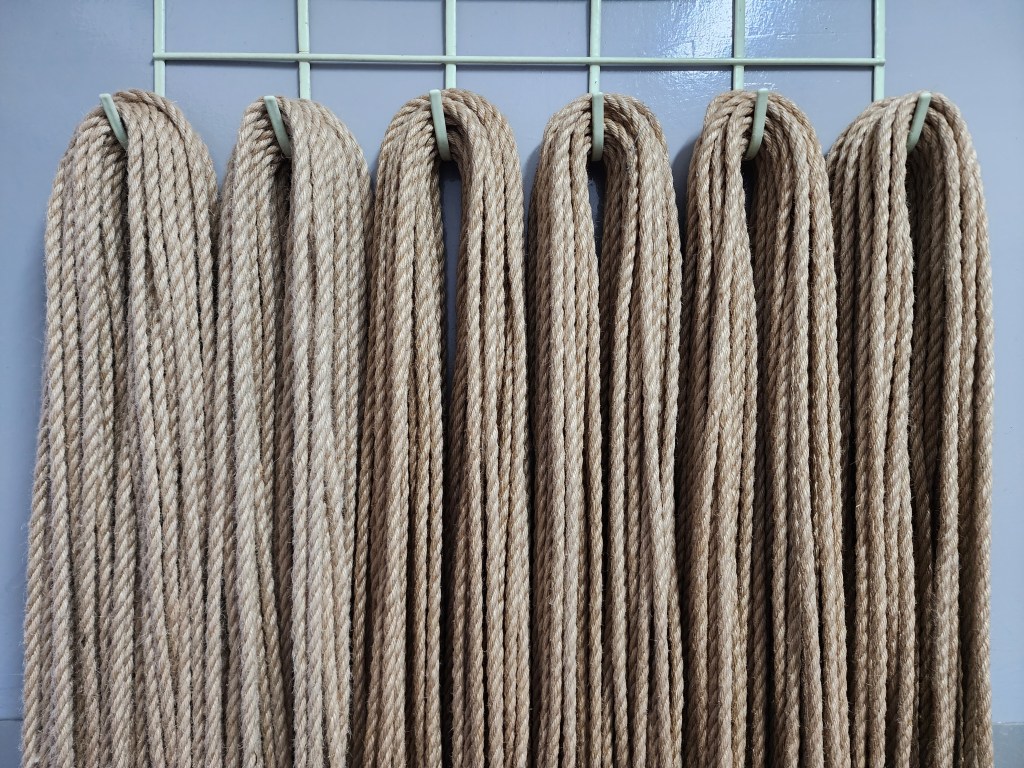
Singeing / Burn It Off
This is the most basic and the most common method of all. It basically means burning all the fuzz off the ropes. Singeing your ropes will also mean that you will end up with a slightly darker rope. Just look at the picture above. the left 2 groups are not singed yet versus the rest.
Just start a fire over your stove or portable stove, and run sections of your rope over it a few times (I usually run over the fire 3 times per section). Repeat till you finish your entire length. During which time, you will see some smoke – You are burning the fuzz, of course you will have smoke! Anyways, it kills some germs along the way as well.
Once you have finish singeing a whole lot of ropes, it is time to clean them up. The singeing process generates A LOT of soot on your ropes. Use a damn cloth and run the ropes through it twice, in different directions. If you like, do it a few more times to really clean the soot off. The type of cloth does not really matter much here. (Although your irritating neighbour clothes works best)
Wax or Oil or Do Both
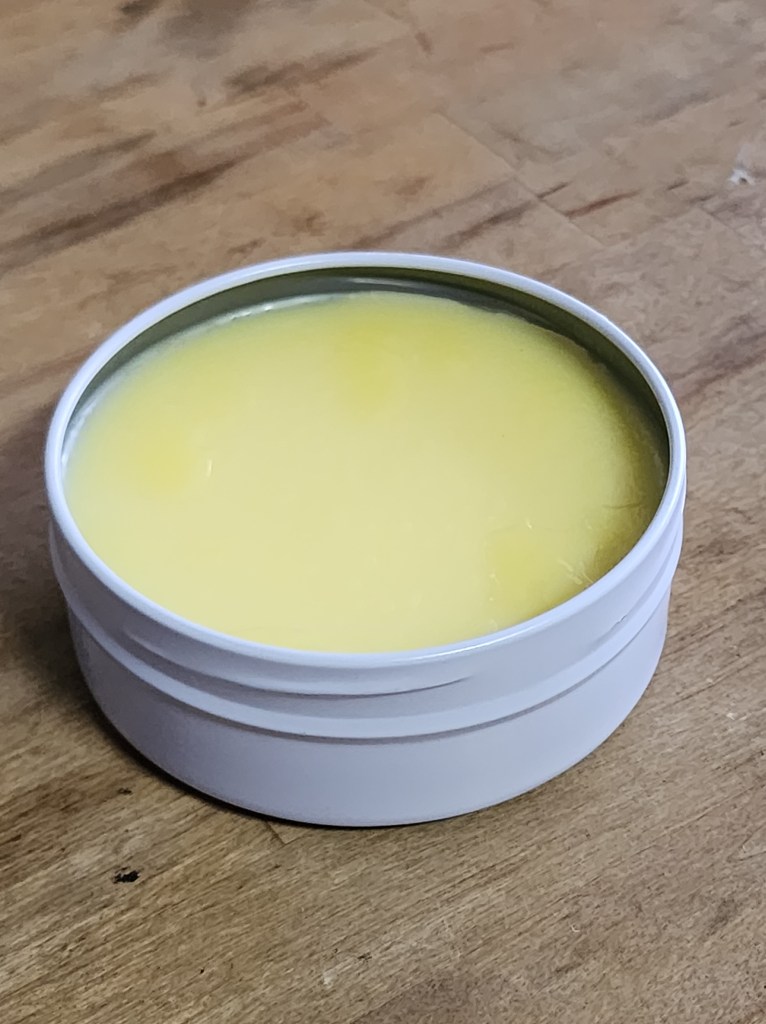
The singeing process do dry out your ropes and at times, you might even have some oil getting burnt or evaporated off from the ropes. This will leave your ropes dry and slightly prickly. What this process does is to re-introduce oil back into the ropes. In the process, giving them back some integrity as well.
Unoiled or un-waxed ropes are kinda brittle and because of all the frictions on going during a tie and more so in a suspension, the jute will give way / break. I did a short test on my 6mm untreated jute rope and stress rub it over a single point – it lasted about 2 mins before it gave way. But with a treated rope, it lasted about 10 mins.
Plus, jute absorbs moisture very readily and you definitely do not want the core to be wet and ultimately rot. And since it is at the core, you can’t see it, making it more dangerous. So the oil and wax somewhat blocks the absorption process.
I like to put wax on my rope as it gives it a nice sheen over it and also reduces the friction between ropes (Something which I prefer for suspension – it is easier to lift). Hence I make a blend of oil and wax for my rope butter.
Type of oil – I use jojoba oil as it is almost the same make up of our own natural oil.
Type of wax – I use food grade beewax. Get them in pellets and it will be easier to manage when making your own rope butter. Beewax have a low melting point so it does gets soft / melted on your hands for application to the rope.
If you want, I do sell rope butter as well.
With rope butter, your beewax is easier to melt on your hands thus making wax application a lot easier as well. (I even use it as my own body moisturiser)
Apply a copious amount of rope butter and rub it on your palms. Now run through the ropes. Making sure it is spreaded nicely on the length of the rope. ‘Refill’ your palms as and when neccessary.
Your rope should not feel too wet from the oil or rope butter. Hang it up for it to dry and air your ropes for about 8hrs.
Breaking The Rope
There are a lot of fibres in the rope that are tightly intertwined during the production process. As such, the ropes will be kind of stiff when you first get it.
Therefore, the process of making the rope more pliable is known as breaking the rope.
More often than not, the process of singeing and oiling your rope would have made it more pliable already, because you are moving the rope quite a bit in between itself and your hands. However, if you are using a tight lay rope (ropes with a tighter twist), you may find that the rope is still quite stiff. This is due to the fact that tight lay ropes twist are tighter and hence inherently stiff. You need to use the ropes a lot more to ‘loosen’ it so that it can ‘fly’ better when you throw the ropes.
Anyways, to break it, run it through a carabiner. Twist the ropes on to itself 3 to 4 times and start alternating your pulls on each end. For each section, alternate about 4 to 5 times. Just like the picture below. This will loosen / break up the fibres inside the rope, making it more pliable for first time use.
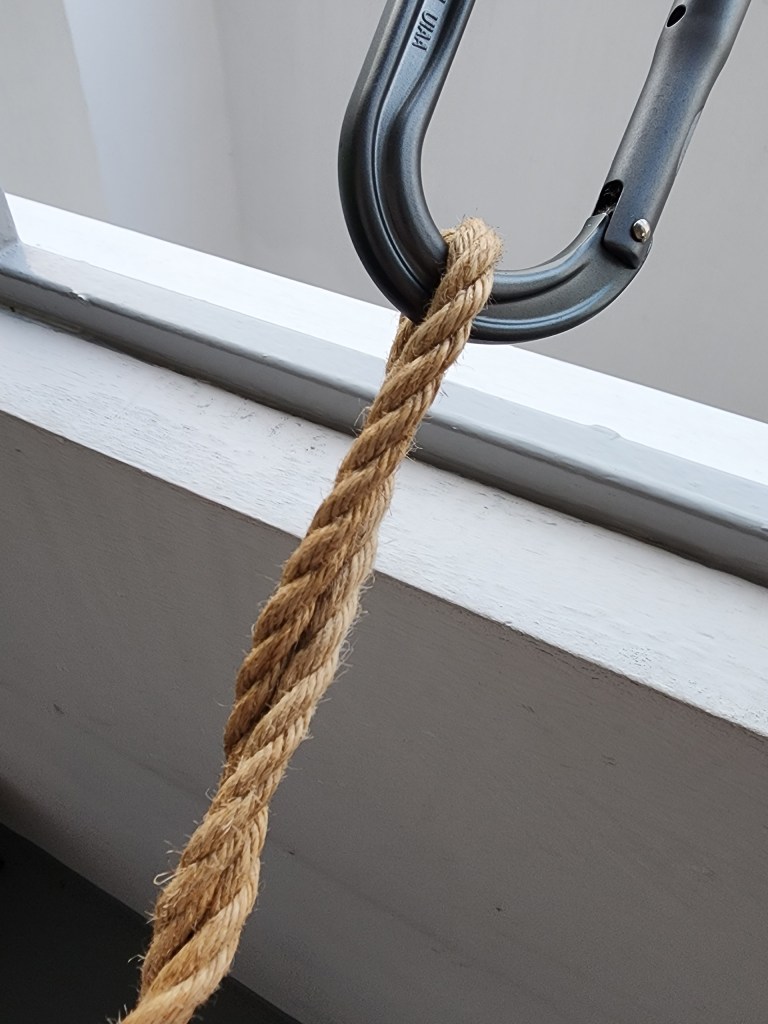
This can also be done if you need to ‘reset’ your ropes once it becomes too twisty, where it curl up onto itself. Because of the opposing forces on the ropes when you tie, the twist in the rope will get misaligned. So this process helps in spreading out the ‘energy’ in the rope and helps in the untwisting situation. But do note that this process will cause wear and tear on your ropes as well. So do it with moderation, if you ever decide to use this method.
Talking about wear and tear, this process is also great for the first step in rope conditioning. By running the ropes onto itself, you simulate it being use in a regular session. And it removes alot of fuzz in the ropes as well. I would sometimes do this as my first step to remove as much fuzz as possible before singeing my ropes.
Side note here:
- Tighter lay ropes are marginally weaker than loose lay ropes since the ropes are already quite stressed in its lay.
- I recommend beginners to use tighter lay ropes as the chances of you ‘poking’ in between the ropes due to improper rope handling is a lot lower.
Wet Treatment
Wet treatment can refer to either boiling or washing your ropes or any method that literally soaks your rope in water. Dyeing your ropes is one wet treatment in itself.
Some manufacturers dye the jute fibres before twisting them. This will yield a very beautiful rope that is coloured to its very core. But it could be stiff as well. Others dye the ropes after twisting. In this case, it depends on how good the dyeing process is. I seen some ropes that are only red on the outside while its core is still not completely dyed. But because of the way it is dyed after twisting, the ropes are usually softer.
Boiling and/or washing your rope removes the original lubricant needed to hold the fibres together. That is why it becomes more pliable after the process. Please make sure you re-introduce enough oil back into the rope!
The drying process is critical in this process. Wash your rope and leaving it on the hanger to let it dry, and you will end up with a noodle of rope at the very end. It has to be dried under tension, at least 30kg of tension. So that the rope will not curl up and become a mess. You also have to reset the rope by passing it through a carabiner as well.
It is messy, and sometimes smelly process. But when you see the amount of dirt and how black the water can be, you will ‘console’ yourself that you made the ‘right choice’. I have a place where I get constant direct sunlight (even under a shade) for at least 4 hrs a day. And that is where I dry my ropes under tension.
The resulting rope is soft and nice. Provided you dry it correctly.
Hot Treatment
This means putting your ropes through heat. This is NOT the best way to dry your wet ropes!
If you have a dryer at your disposal, then loosely tie your ropes and place them into a laundry bag. If possible, lightly wax and oil your ropes before you place them in the bag as well. Turn the dryer in medium heat and let it do its magic for the next 90 minutes. Then again for another 30 minutes after you ‘top up a little more wax’ into the bag.
Once you are done, you have amazingly soft nice ropes with little fuzz or fluff to them. Ready to be used on the most sensual body in your next session. At the same time, your wife / female partner will murder you for introducing so much lint and fluff into the dryer, effectively choking the filter as well. So you have to be prepared to vacuum the dryer, clean the filter whenever you do this method. (Or just use your irritating neighbour’s dryer)
For those people who have ropes processed with JBO, you may want to put the ropes into a hot air oven for 5 – 6 hours (at 150 – 180 degrees Celcius) to rid the chemicals (and smell) once and for all. The ropes will also come out soft as well! I do own a spare unused old BBQ pit and I did ‘BBQ’ the ropes for a good 5 hrs, releasing (toxic) steam every 1hr or so. Interesting, I also decided to try ‘smoking’ my ropes. I ended up with soft, pecan wood smelling ropes. But smoke is sticky, so you need to run the ropes through a damp cloth to wipe it down clean. 😆
[UPDATE] For the racid smell of JBO ropes, you can try to hang your ropes somewhere in a ventilated area for about 3 weeks. The longer you leave it out to air, the less racid to no smell at all too.
These are some of the methods that I used to condition some of my ropes, and I pretty found my own favourite sequence and methods to condition my ropes. Have fun conditioning them. Sometimes, it can be very therapeutic; at least for me.
As an ending note, I love my neighbours and luckily for me, I do not have irritating ones.
 Nawa Kenshin
Leave a comment